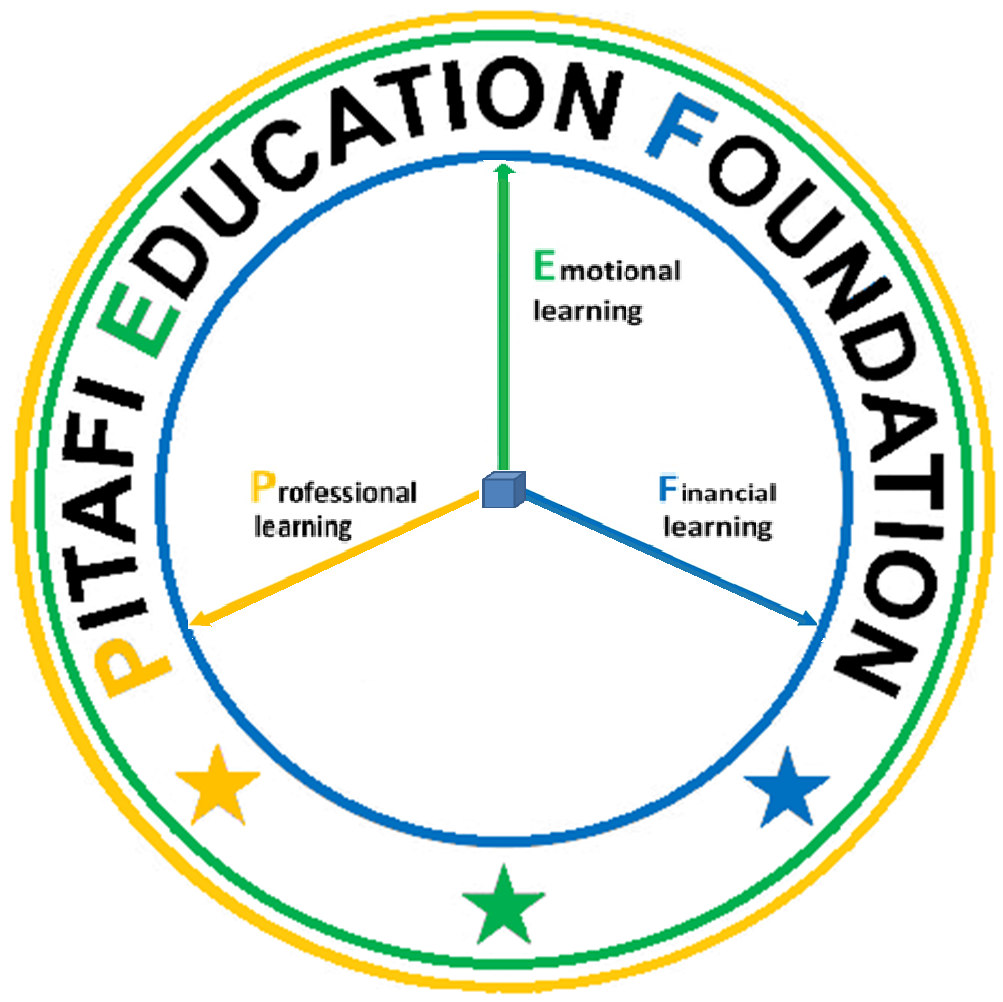
1. Professional Dimension
Related to the Intelligent Quotient (IQ), the Professional dimension is normally concerned with professional skills and knowledge in any particular domain. Pakistanis, when given the opportunity and the right environment, typically excel in this dimension. We aim to enhance learning in this dimension with a focus on use of technology and practical-based training.
2. Emotional Dimension
Related to Emotional Quotient (EQ), this dimension is the most ignored one in our current educational system. The people of Pakistan, although very talented and proficient in the professional dimension, are often lacking in the emotional domain, with very low EQ levels. This deficiency has led to the exploitation of the Pakistani populace for many years by clever individuals and groups within society, for their own purposes. Moreover, it is the 'fear' which supresses all the qualities and blocks the growth of an individual. Key attributes of emotional personality building to be taught and incorporated into every program executed by the foundation, are;
-
Self-Respect
Self-respect involves treating oneself (and others) with kindness, compassion, and dignity, regardless of external circumstances. It goes against a person's self-respect to seek undue favor or breach the respect of others, including individuals and organizations. Training students in self-respect by showing them respect is the first rule of emotional learning.
-
Self-Confidence
Self-confidence refers to a belief in one's own abilities, qualities, and judgment. It is the assurance and trust in oneself to handle situations, overcome challenges, and achieve success. By providing an encouraging environment, we develop the essential quality of self-confidence in our members.
-
Self-Reliance
Self-reliance refers to the ability and willingness to rely on oneself for support, guidance, and fulfillment, rather than depending excessively on others or external sources. It is rightly said, 'Self-help is the best help.' Members are trained to develop this skill through motivation and encouragement.
-
Self-Discipline (Self-Management)
In the conventional educational system, students often attend classes primarily out of fear of failure, particularly due to concerns about meeting attendance requirements, rather than from a genuine inner passion or self-discipline. At our institution, we are committed to cultivating the qualities of self-discipline and self-management among our students by fostering inner passion and resilience, while alleviating external fears. Our goal is to empower students to become high achievers in their future endeavors.
-
Self-Learning
The fundamental rule of progress is when students surpass their teachers in terms of knowledge. Throughout history, humans have achieved remarkable feats precisely because younger generations have surpassed older ones in acquiring knowledge. Learning is a lifelong journey that never ceases. Unfortunately, in current educational systems, there exists a misconception that teachers possess all the knowledge while students know nothing. In reality, students have the potential to acquire new knowledge and expand the boundaries of existing knowledge
-
Self-Evaluation
Parents evaluate the behavior of a child, then in school, teachers evaluate the performance of a kid, and even at university, professors assess the quality of work done by a student. So throughout the educational tenure of approximately 16 years, an individual never gets the opportunity to learn 'self-evaluation.' That is why they face issues in professional life. A product developed or a task done by these qualified persons needs external evaluation in order to improve, and by then, it's often too late. At PEF, we give students the opportunity to evaluate their own work. Result sheets have two columns: student self-evaluation and teachers' evaluation. The objective is simple: students' own (internal) evaluation should match the external evaluation of their work. This is a key skill that can make them successful in future life.
-
Self-Responsibility:
Successful people always take responsibility for what happens in their lives. There is a famous saying, "You can either be right or you can be rich, but not both." Yes, it may be the teacher's fault that you failed, or the customer's fault that your product is not being used. However, the rule is simple: "Save yourself from the mistakes of others," and only then can you be successful.
-
Self-Driven
Successful people are highly focused and self-driven, rather than being driven by their environment. In any environment, there will always be numerous hurdles, obstacles, and distractions that can derail a person from the path to success. Only an individual trained and equipped with self-driven skills can overcome these challenges and achieve their desired goals.
-
Self-Control
Self-Control refers to the ability to regulate and control one's behavior, emotions, and impulses in order to achieve desired goals or adhere to a set of principles or standards.Having self-control involves the capacity to resist temptations, distractions, and instant gratification in favor of long-term objectives or commitments. Self-controlled individuals demonstrate willpower, perseverance, and determination in pursuing their objectives. They are able to prioritize tasks, manage their time effectively, and stay focused on what matters most to them.
3. Financial Dimension
Related to Financial Quotient (FQ), this dimension is concerned with the understanding of financial matters and financial management. It is no wonder why Pakistan is in such poor financial condition, as financial literacy is very low. Even many qualified and professional Pakistanis struggle to file their tax returns. Doctors, engineers, and other professionals work throughout their lives yet remain unable to achieve financial freedom. They may not even understand the concept of 'Financial Freedom.' Learning in this dimension is an integral part of all the programs being run by the Pitafi Education Foundation.